Building on over a decade of product experience since 2014, I designed the Telegram mini app UI for Immersee, an AI companion platform for an adult audience.
I took a complex set of backend mechanics and shaped them into a dark, atmospheric interface that felt premium and seductive without crossing into vulgarity.
About the Project
Immersee is a Telegram mini app built around an AI companion for an adult audience.
While the actual chat and content generation happened directly inside Telegram, my job was to design the mini app layer.
The core challenge was striking the right tone. We needed an atmospheric, high-end environment that felt private and intriguing without looking cheap or explicit.
The Task
When I joined, the team had already mapped out the technical constraints and core requirements.
My role was not about inventing new mechanics from scratch, but rather translating those backend specs into a polished visual system.
Working closely with the Product Manager, I designed the entire mobile UI from scratch, covering the store, character customization, monetization flows and final developer handoff.
Visual Direction
We had no existing design system or strict visual guidelines. The team wanted something moody, exclusive and slightly futuristic.
I built a dark visual direction using subtle glow effects, grainy textures, frosted glass surfaces and high-contrast accent buttons.
Because adult content can easily look tacky, I kept the UI elements clean and restrained. The interface needed to complement the artwork rather than compete with it.

Store & Customization
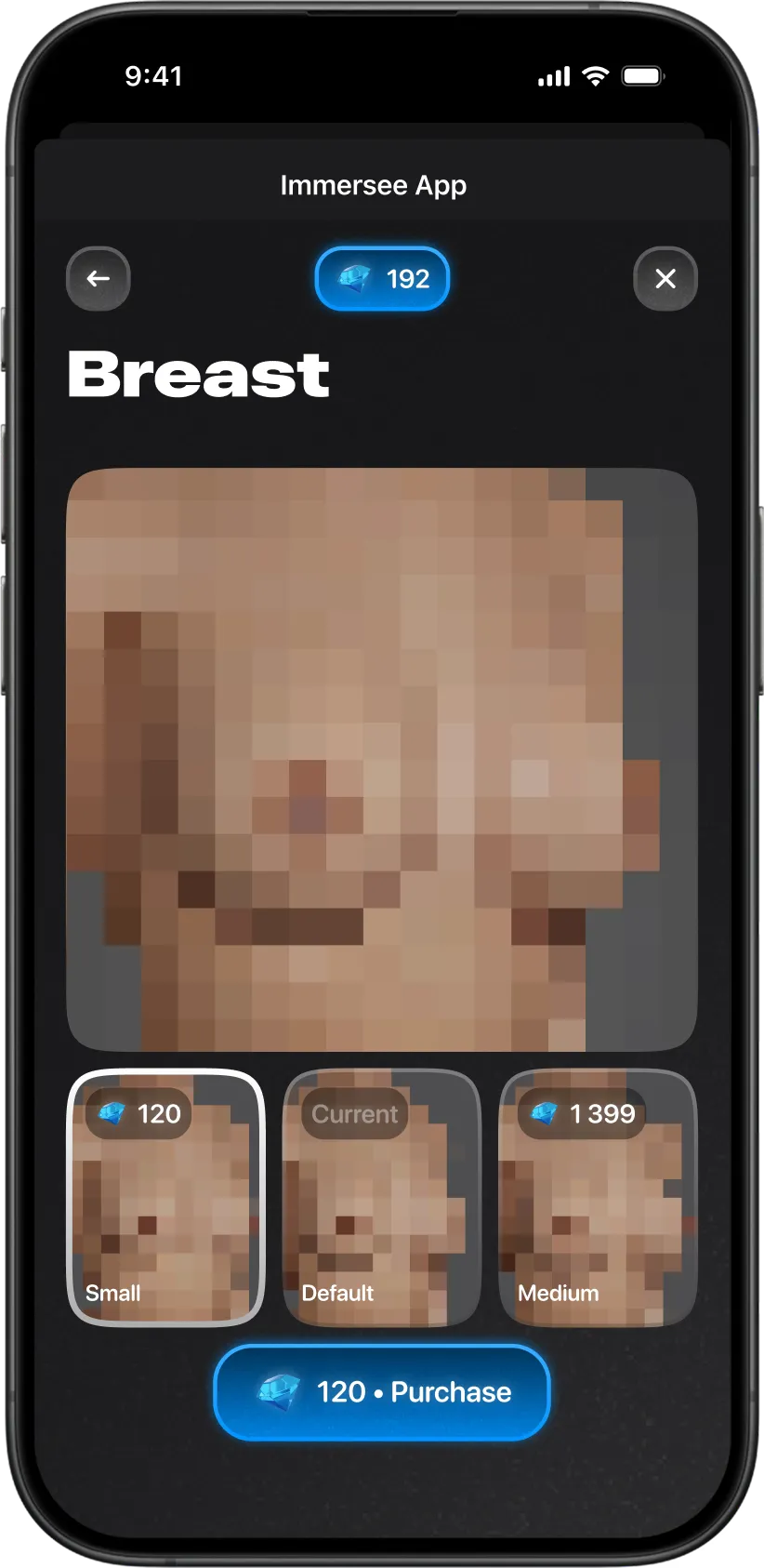
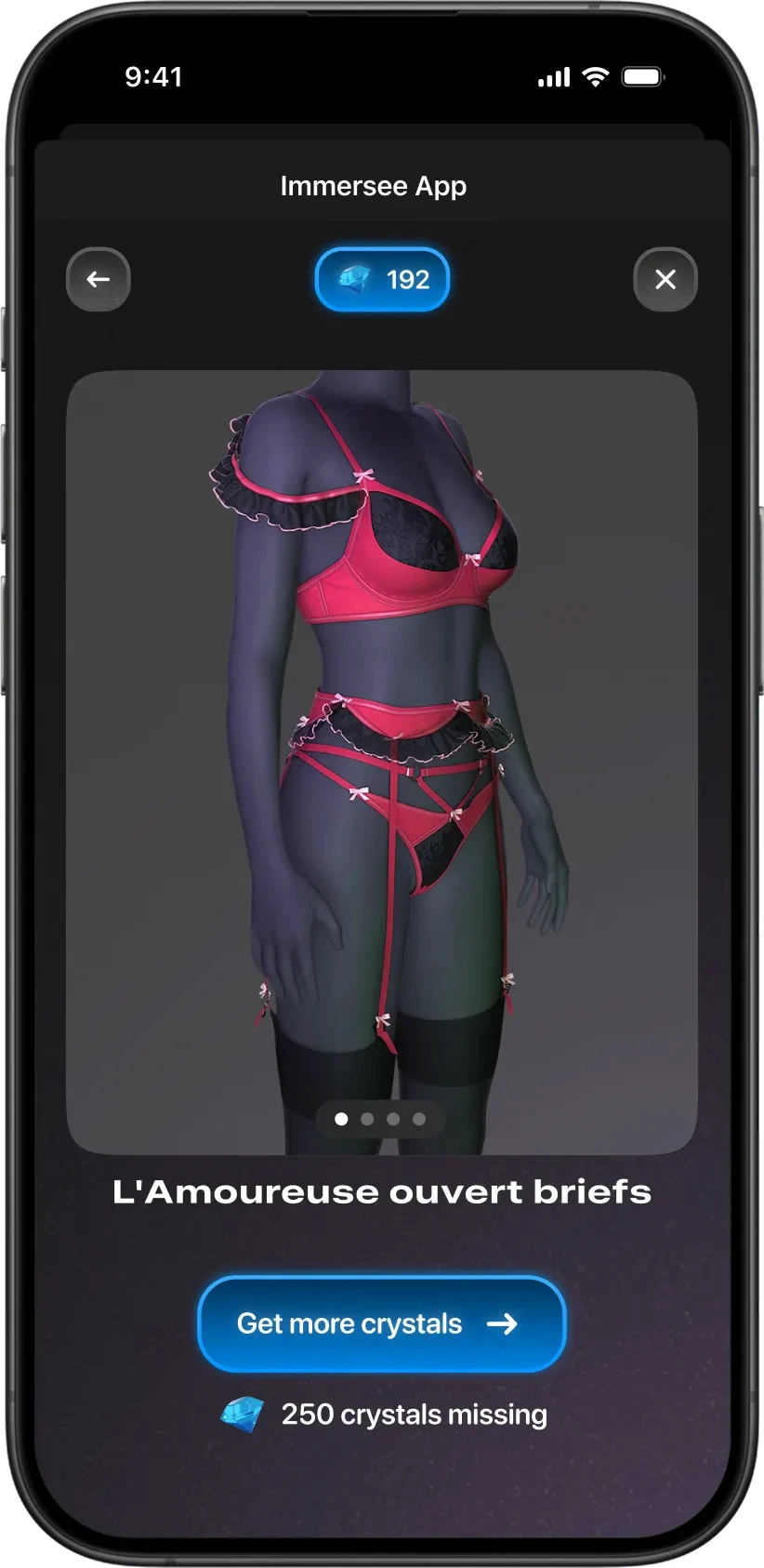
The in-app store was the heaviest section to design, so I tackled it first. It needed to handle item catalogs, detailed previews, pricing tags, modal popups and balance top-ups.
I used large image cards, soft rounded corners and high-contrast badges to make navigation effortless.
Selecting an item opened a detailed preview screen where users could review their purchase, check their balance or top up directly if they were short on funds.

Interface Approach
To keep the workflow fast and cohesive, I used a modular design strategy:
1.
Built and refined the complex store screens first to establish the visual foundation.
2.
Reused those UI patterns and component logic across all secondary sections.
3.
Iterated based on team feedback and packaged every state for a clean engineering handoff.
Monetization & In-App Currency
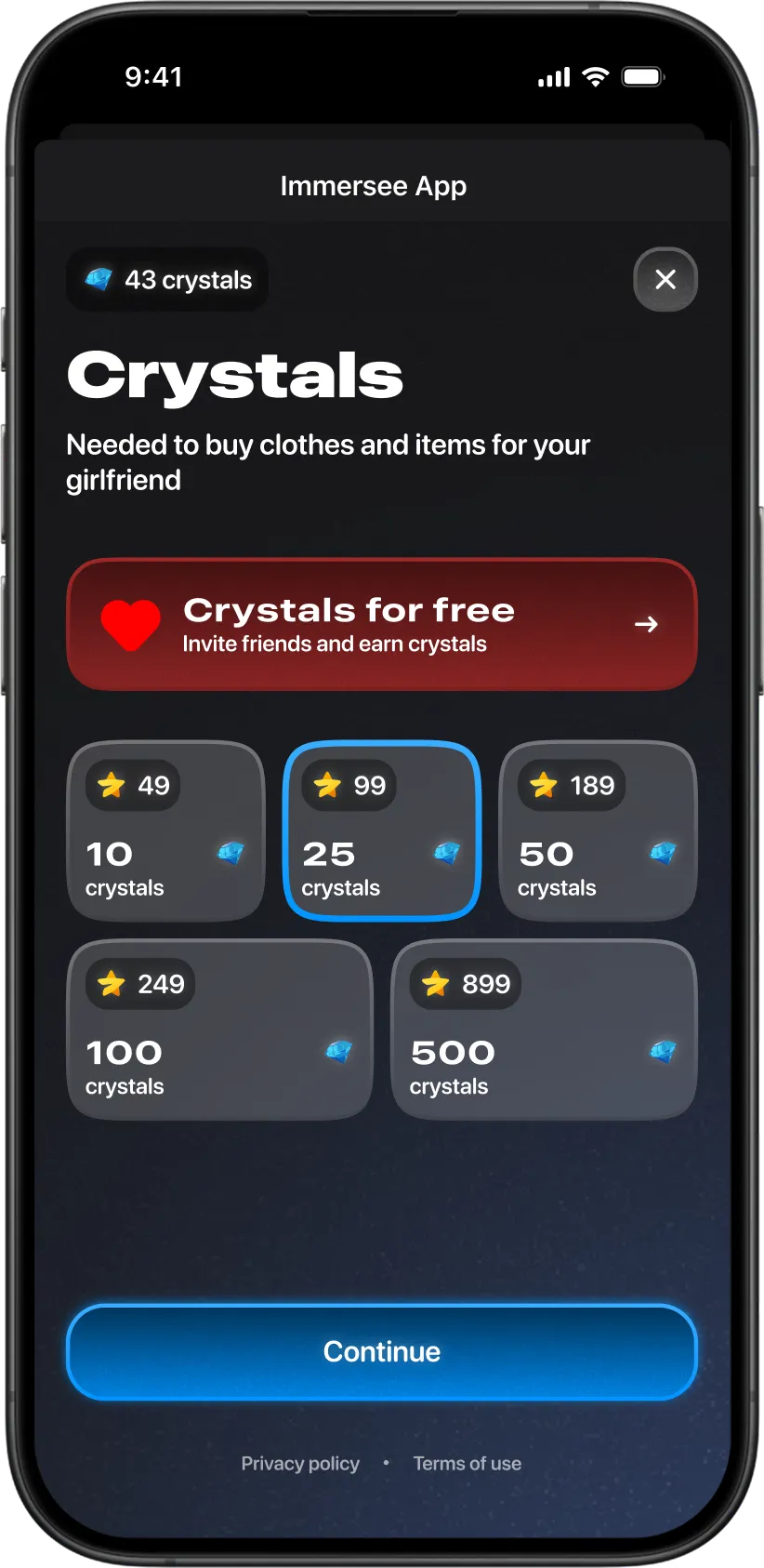
The app relied on two main currencies: Energy for generating AI content and Crystals for unlocking premium items.
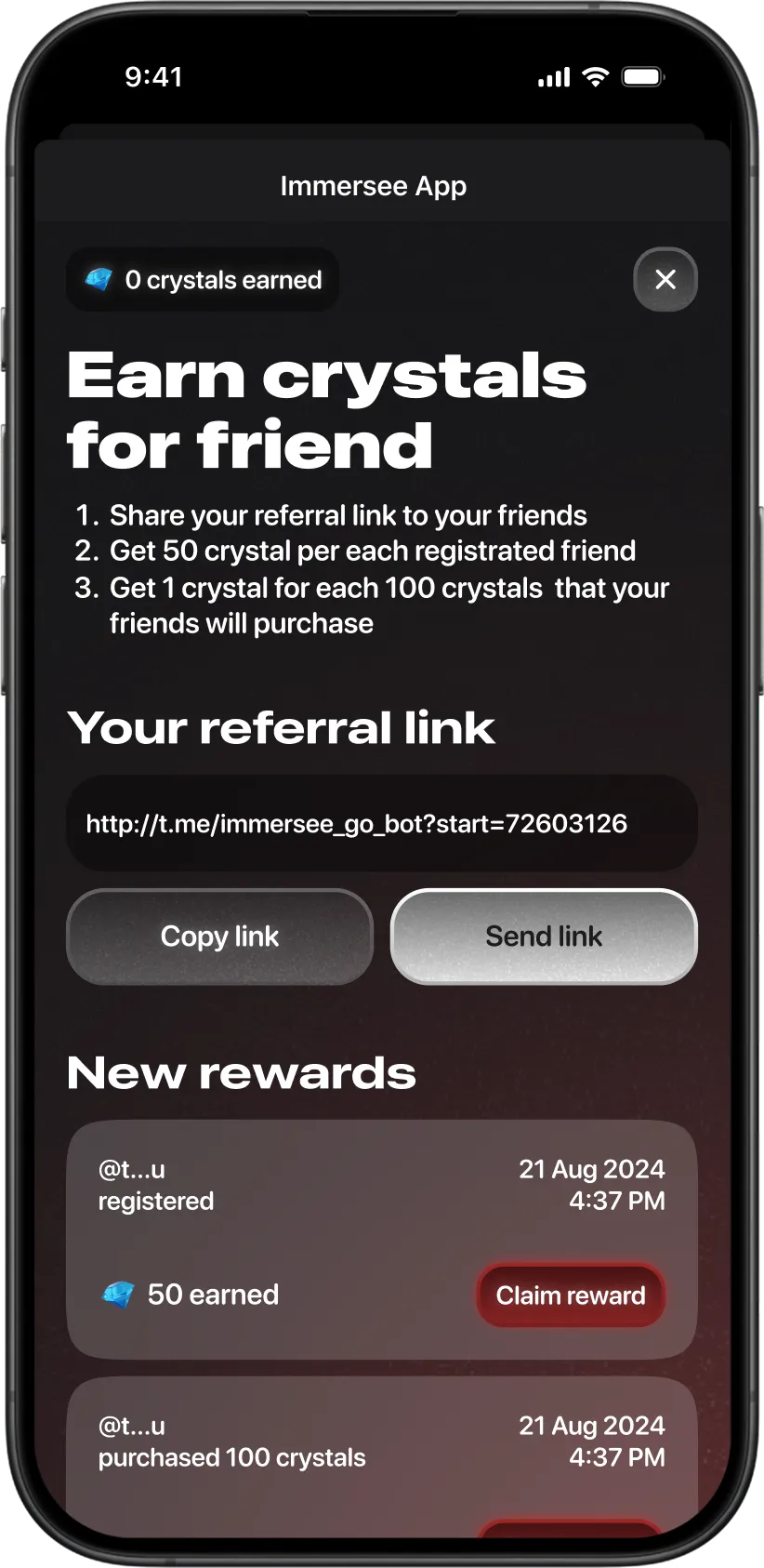
I designed distinct purchase screens for buying resource packs, continuing payment flows and claiming referral bonuses.
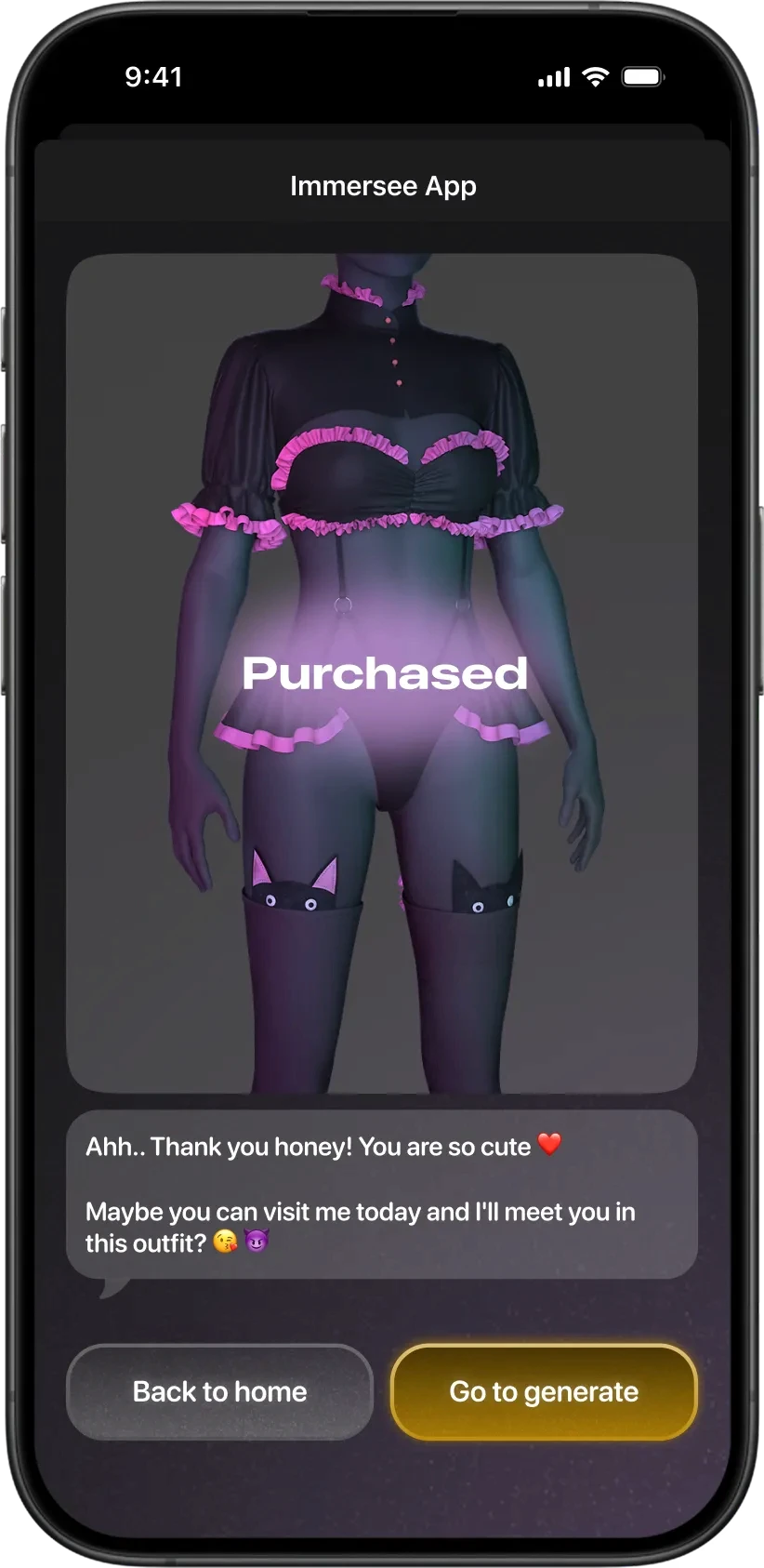
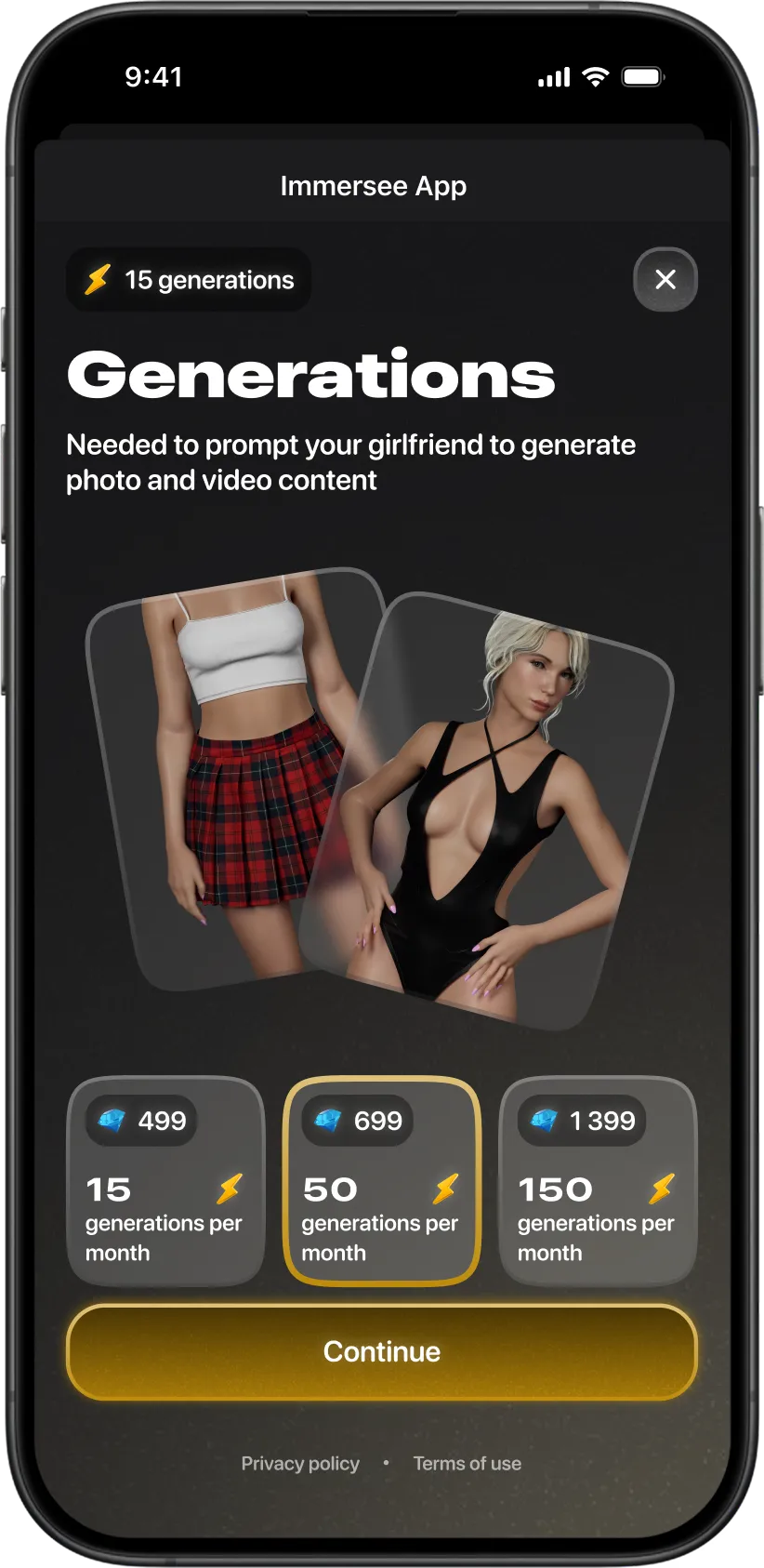
These screens were designed to be straightforward and clear, helping users instantly see what they were buying and complete transactions without extra friction.
Takeaways
I delivered a complete UI design package, and Immersee successfully launched in beta.
Though the bot is no longer active today, it was a fascinating project at the intersection of AI, Telegram mini apps and adult entertainment.
The biggest takeaway was learning how to handle delicate, adult-oriented themes through quiet, premium UI design rather than loud or aggressive visuals.
